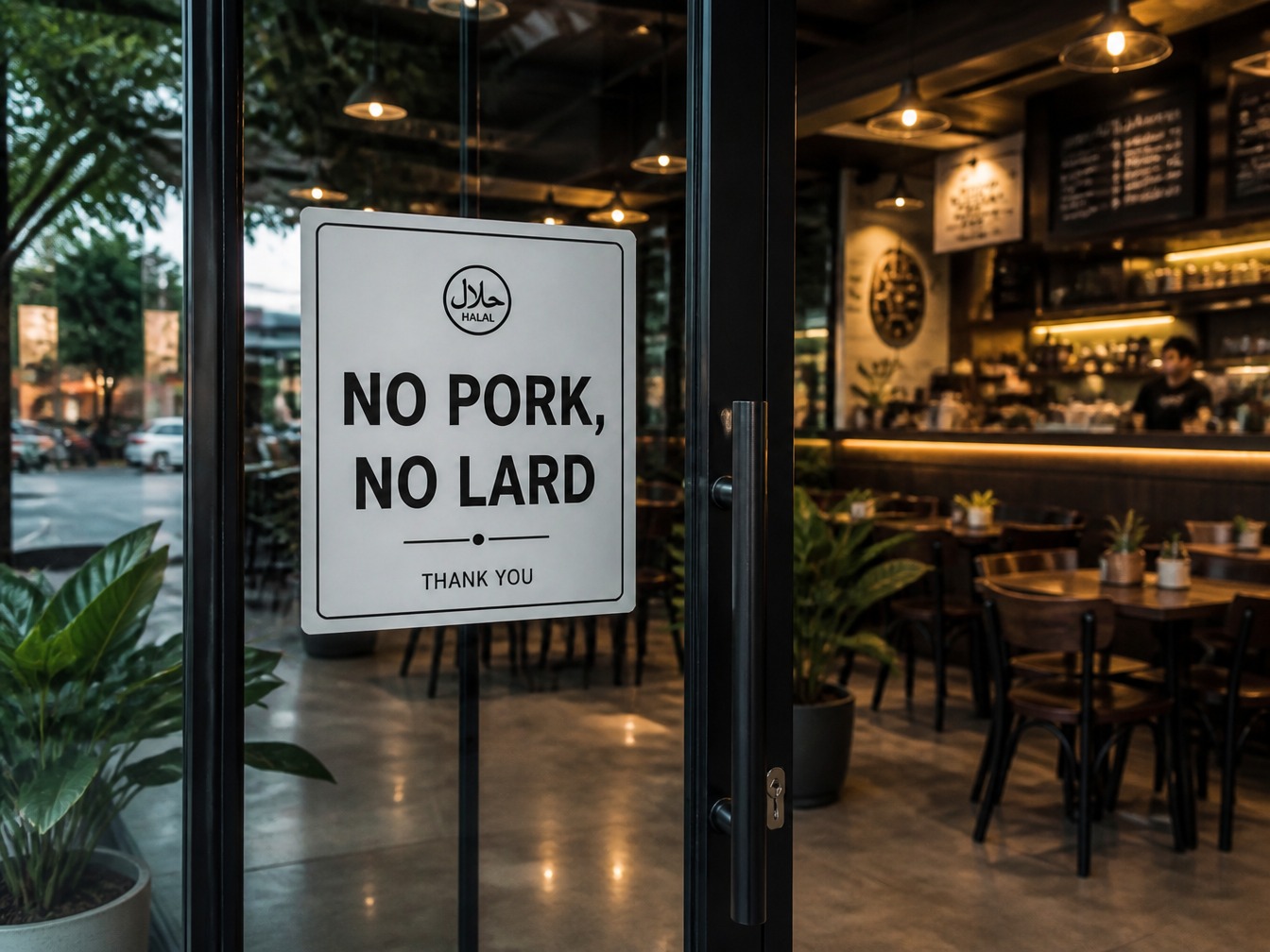
SHAH ALAM — The Selangor Islamic Religious Department (JAIS) has issued a strict reminder to food operators regarding the usage of alternative Halal descriptions. Businesses operating without an official Malaysian Halal Certification (SPHM) are strictly prohibited from displaying signs like “No Pork, No Lard” or using phrases such as “Muslim-friendly”.
According to a representative from JAIS, displaying these informal terms can mislead consumers into assuming a product or establishment complies with true Halal guidelines. However, without a formal SPHM issued by JAKIM or state religious authorities, there is no verified guarantee that essential Halal requirements are being met.
Understanding the Pitfalls of Unofficial Terms
Many food premises utilise “No Pork, No Lard” signboards to signal inclusivity to Muslim diners. Despite their intentions, JAIS explained that these phrases are highly incomplete and fail to address broader Halal compliance protocols.
Specifically, while the sign indicates the absence of pork, it completely overlooks critical parameters like cross-contamination risks, the presence of alcohol, non-Halal gelatine, or the use of uncertified raw materials. Genuine Halal standards cover the entirety of processing workflows, material tracing, and structural cleanliness. Therefore, using alternative phrasing without a valid license creates a regulatory violation that causes unnecessary confusion among consumers.
Punishable Offences Under the Trade Descriptions Act
Displaying misleading Halal claims is a legal offence in Malaysia. Under Paragraph 4(1) of the Trade Descriptions (Halal Certification and Marking) Order 2011, it is illegal to supply or offer food using any representation likely to mislead or confuse a person into thinking the food is Halal.
Consequently, business owners using unauthorised markers can face heavy penalties. Regulatory agencies strictly enforce these laws to maintain the absolute integrity of Malaysia’s food distribution ecosystem. Only establishments that successfully pass official audits are legally permitted to market themselves to Muslim consumers using approved terminology.
Smart Verification via the Verify Halal™ App
As authorities ramp up enforcement against uncertified signs, consumers need an efficient way to verify where they dine. Instead of depending on ambiguous storefront notices, diners can actively protect their peace of mind by relying on the Verify Halal™ app.
The Verify Halal™ platform allows users to bypass marketing jargon by directly looking up an establishment’s authentic database records. By cross-referencing names inside the application, you can instantly confirm whether a restaurant holds a valid, active SPHM certificate from JAKIM.
Ultimately, combining official enforcement from JAIS with digital tools like Verify Halal™ creates a highly secure environment for the public. Hopefully, by eliminating misleading signage and promoting authentic compliance, we can significantly assist in promoting and elevating consumer safety and transparent regional tourism as well.
Source: says.com