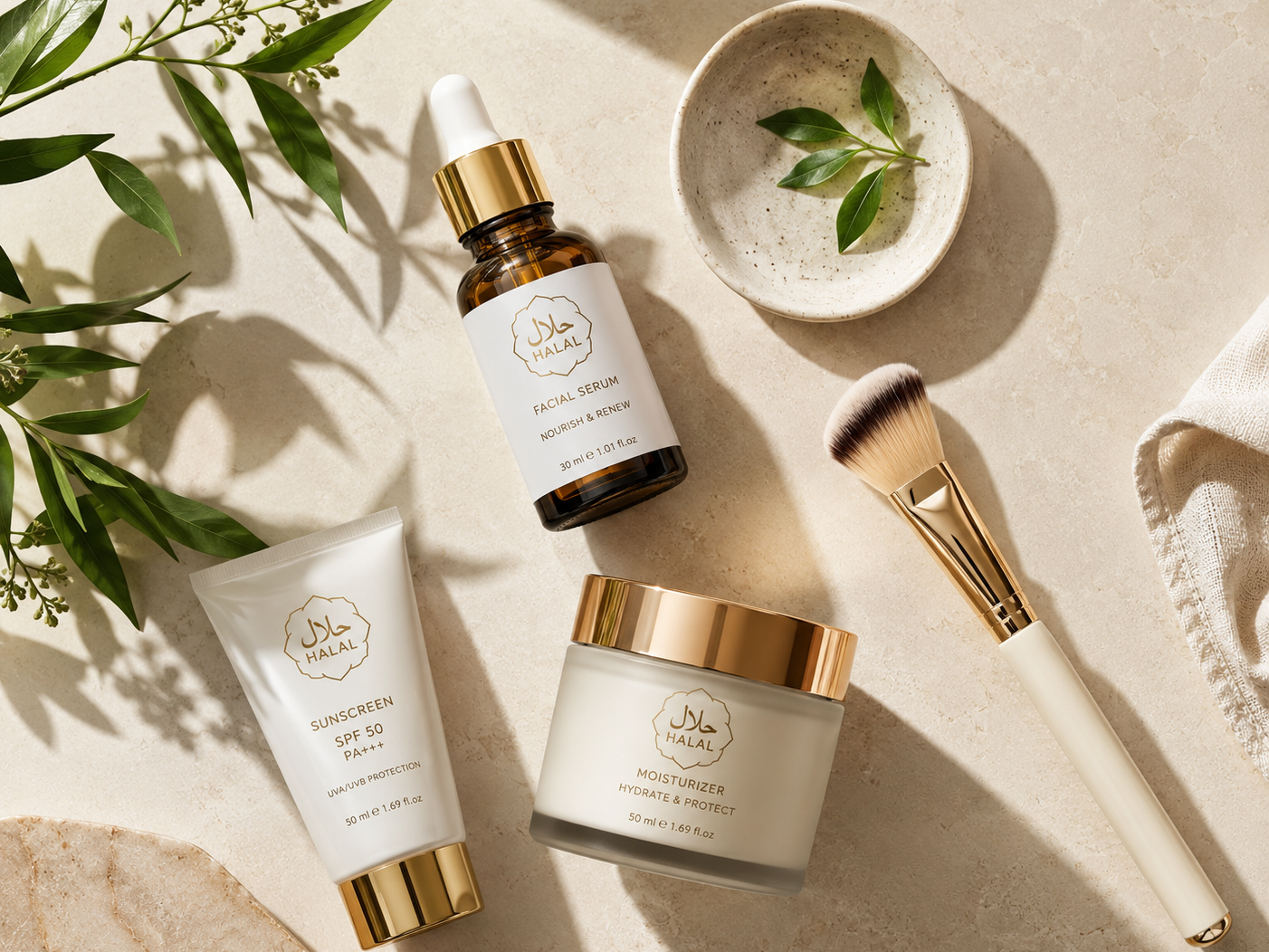
Cosmetics are an integral part of modern daily routines, ranging from skincare and makeup to personal hair care. For Muslim consumers, Halal considerations extend well beyond dietary choices to anything applied directly to the body.
However, determining whether a cosmetic item is Halal can be challenging. The origin, chemical processing, and handling of cosmetic ingredients all directly impact a product’s Halal status.
Why Ingredient Sources Matter
Cosmetic labels frequently feature complex scientific terms that hide an ingredient’s true origin. For instance, a single chemical compound can be derived from plants, animals, or synthetic sources. Therefore, simply reading an ingredient name is rarely enough to verify compliance.
Animal-Derived Ingredients Require Close Attention
An animal-derived ingredient is not automatically Halal. Its permissibility depends strictly on the animal species and the specific slaughtering method used.
- Prohibited Species: Materials derived from pigs or dogs are strictly forbidden (haram) under Islamic law.
- Slaughter Compliance: Permissible animals must undergo Shariah-compliant slaughtering and handling processes.
Consequently, ingredients like collagen, gelatin, fatty acids, and glycerin vary widely in source. Without detailed supply chain data, consumers cannot easily determine Halal status from a product label alone.
Common Cosmetic Ingredients to Watch
Certain widely used cosmetic ingredients require extra scrutiny regarding their supply origins:
- Collagen: Frequently used for skin conditioning; often sourced from animal tissue.
- Gelatin: Derived directly from collagen and heavily reliant on animal processing.
- Glycerin: A popular moisturizing agent sourced from either plant oils or animal fats.
- Fatty Acids: Base compounds for creams and lotions that can have plant or animal origins.
- Allantoin: Used in soothing skincare; requires careful verification of its manufacturing process.
Ultimately, the key factor is traceability—knowing exactly where an ingredient originates and how it was manufactured.
Halal Is About More Than Ingredients
Achieving true Halal integrity involves processing, storage, logistics, and preventing cross-contamination with non-Halal substances.
Furthermore, popular marketing terms like “natural,” “organic,” “clean,” or “vegan” do not guarantee that a product is Halal. While these labels describe specific product traits, they are never legal substitutes for official Halal certification.
Cosmetics and Daily Prayer
Muslim consumers must also consider how cosmetic products interact with religious purification rituals (wudhu). Products containing non-Halal elements or forming waterproof barriers can prevent water from reaching the skin. When facing genuine uncertainty, consumers should seek reliable religious guidance rather than relying on unverified social media claims.
How Certification and Digital Tools Provide Assurance
Consumers can make confident purchasing choices by adopting a few practical habits:
- Look for Official Certification: Verify authentic Halal logos on packaging.
- Inspect Specific Ingredients: Pay close attention to animal-derived compounds.
- Avoid Marketing Assumptions: Do not confuse “vegan” or “clean” labels with Halal compliance.
- Demand Product Safety: Ensure the cosmetic meets national safety regulations alongside Halal requirements.
How Verify Halal™ Protects Consumers and Businesses
Interpreting chemical cosmetic labels is difficult for everyday shoppers. The Verify Halal™ mobile app helps users check active certification status in real-time before making a purchase.
For beauty brands, Halal integrity begins deep within the supply chain. By maintaining transparent documentation and using standardized controls, businesses build lasting consumer trust.
Shop with confidence. Download the Verify Halal™ app on the Google Play Store or Apple App Store to verify your skincare and beauty products instantly!
Source: Berita Harian